Etiqueta: Sinologic

  • Telecom services paralyzed after Nationwide Blackout

    On April 28th, a general blackout occurred across all of Spain, and by extension, also in Portugal due to the proximity and electrical interconnection between the two countries. At 12:30 PM, a widespread power outage affected every device connected to the power grid, and for a few minutes, confusion and anxiety prevailed. During those minutes, all fiber optic connections began to shut down, which meant that a lucky few with Uninterruptible Power Supplies (commonly known as UPS) were still able to access some news websites and realize the outage was larger than it initially appeared.

    Unfortunately, UPS systems only last a few minutes—just enough to withstand an electrical fluctuation or to safely shut down servers if the outage lasts too long—so we were left with only mobile networks, the saviors during catastrophes, with batteries meant to last 24 hours without electricity, or at least, that’s how it should have been.

    Unfortunately, many antennas also lost electrical connection in most cases; in others, although there was coverage (the antennas were powered), there was no internet or phone traffic. In other cases, the antennas lasted even less than a household UPS, and all signal disappeared in barely two minutes. Many antennas couldn’t withstand even one hour of power outage, leaving thousands of people completely out of communication.
    As the ad once said, “the future is mobile,” and anything that isn’t a mobile network hardly seems worth maintaining. The copper network has been removed and replaced by a fiber network that requires continuous power. In these cases, UPS units last only a few minutes to prevent brief electrical interruptions. But when Europe advises us to prepare an “emergency kit” designed to sustain us for at least 48 hours without leaving home, they should also recommend that communications be able to last more than just a few minutes.

    I confess I’m not a “prepper” at all—if disaster strikes, I’ll surely be caught without toilet paper, without drinking water, and with an empty fridge. Nevertheless, I’m aware that we should be at least minimally prepared and store a few cans of food “just in case.”

    We are so dependent on electricity and communications that, if either is missing, people would go crazy—and if communications also depend on electricity, it makes us even more vulnerable, as has been demonstrated.

    Luckily, there weren’t many tragedies to mourn. Some people had difficulties with respirators, oxygen machines, or CPAP devices for sleep apnea, but in these cases, the inability to communicate greatly increases the sense of vulnerability and lack of response. (I won’t even go into political incompetence and the lack of useful, swift responses to a disaster of this magnitude.)

    Data centers are required to have backup systems that allow them to operate for many hours in case of a power outage. These backup systems use generators, solar panels, etc., and thanks to them, many systems continued functioning once power was restored. However, Movistar (and by extension, all mobile networks that rely on it) continued to experience issues with mobile service 48 hours after electricity returned. Is the mobile network really so unresilient that it still couldn’t support phone calls 48 hours after power was restored?

    We must learn something from all this: in this case, that the electrical grid and power systems must be more robust. We need to be “more independent,” both at the national level and on a personal level. Having backup batteries at home to power LED lamps, charge mobile phones, a battery-powered radio to hear the news, a walkie-talkie to communicate without relying on a company that might let you down at such times, or an alternative way to cook besides the typical electric stove/microwave/oven—these are all things that should be part of the “emergency kit” we now need to take seriously.
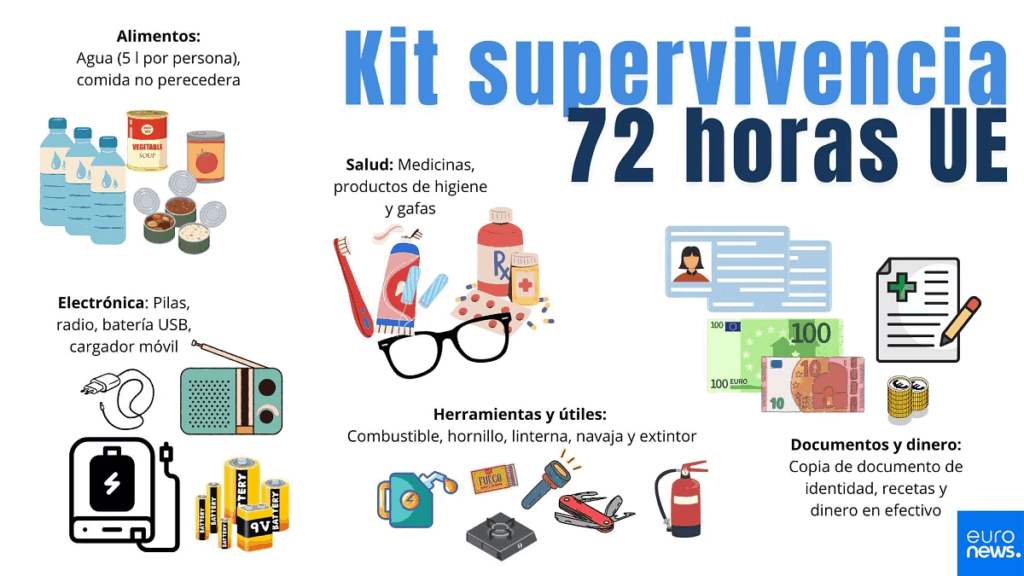
    As I said, we must learn something from every situation—and in this case, I’m going to take that “emergency kit” that Brussels recently announced (and half the country, myself included, laughed off) much more seriously.
  • How to quickly add a watermark to your ID or identification document

    How to quickly add a watermark to your ID or identification document

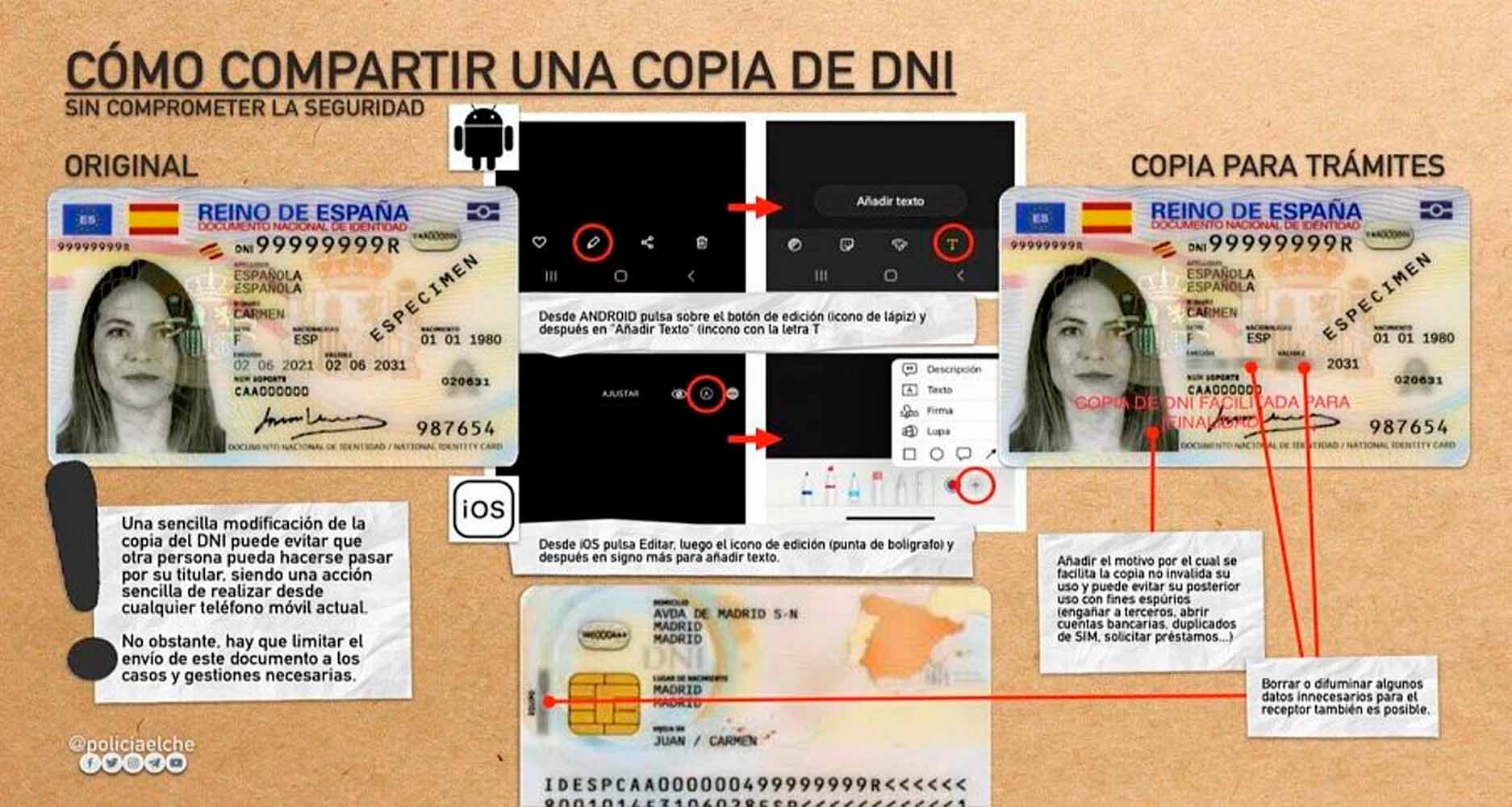
    It is clear that sending a photo of our ID to anyone over the internet is a bad idea: we run the risk of it being stolen, copied, or ending up in the wrong—or a stranger’s—hands, where someone could impersonate us, authorize transactions, or carry out illegal activities on our behalf.

    Unfortunately, there are procedures that require us to submit data from our ID, so it’s better to use a black-and-white photo with some of the information pixelated and a watermark indicating its authorized use.

    It might seem like something any photo editing application could handle, but there have been times when I needed to send an ID immediately and didn’t have time to add a watermark.

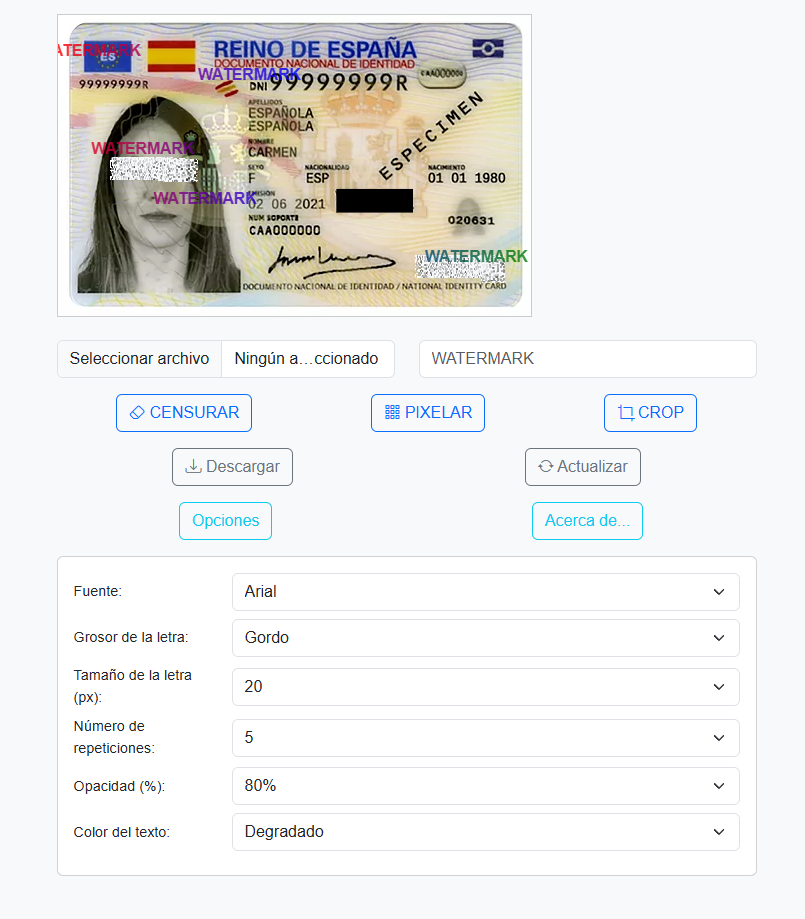
    For this reason, I have created a tool to add a watermark to our photos of our ID, passport, or any other identification document, featuring several interesting characteristics:

    • First and foremost: No image is ever shared; all editing is done using JavaScript in your own browser, making it completely secure.
    • It allows you to edit, censor, pixelate, or crop any part of the image you need, so you can conceal portions of your identifier.
    • You can fully customize the watermark: add any text you want, select the font, size, thickness, the number of times it appears, the color of the watermark, its opacity, etc.
    • This will generate your own modified image, ready to be shared with all the changes you have made.

    The tool is available at: https://sinologic.net/proyectos/watermark/

    If it suits you, feel free to bookmark it for whenever you need it.

  • The SinoLogic team wishes you a Happy New Year 2025!

    The SinoLogic team wishes you a Happy New Year 2025!

    The last day of the year, accompanied by the traditional pre-holiday cold, is the perfect time to review the news and articles we’ve encountered throughout what has been an especially fascinating year. This isn’t just due to the innovations VoIP has brought us, but also because of other closely related developments, such as the rise in cybersecurity attacks affecting telecom companies and manufacturers, and the unparalleled growth of artificial intelligence. These are the same fields we predicted several years ago would dominate this decade, reshaping everything we know about the world of communications.

    Today is an excellent opportunity to look back, reflect on the year, and set New Year’s resolutions. This year, I plan to follow the example of some colleagues: create a list of resolutions and work day by day to achieve them with clear goals and measurable results. AI will surely be a helpful tool in this regard. It’s as simple as bringing out the virtual assistant and asking it to suggest an intriguing list of resolutions for the new year.

    Among my resolutions for this new year:

    One of my goals is to write more often. It’s not that I lack topics to write about, but this year has been rather challenging, and finding the time to sit down and write in peace hasn’t always been easy. Additionally, there are some topics I prefer not to reveal until they fully materialise, and the kind of news that used to fill blog pages so abundantly now might barely make up a monthly article if we’re lucky. Nevertheless, as many of you may have noticed, including other subjects such as cybersecurity, the rise of AI, and some rather curious regulatory changes means that writing is no longer an issue of running out of ideas but rather a matter of finding time. So this year, I’m once again committing to writing more frequently on topics that might interest readers.

    Another resolution is to give the blog a fresh look and reduce its weight. After 20 years of publishing articles on SinoLogic, it’s high time for a radical change. We’ll be looking for ways to streamline the site, make it faster, and present more engaging and dynamic content.

    A challenge to end the year:

    Before saying goodbye, I’d like to leave you with a little game:
    Over the years, we’ve endured attacks, version updates that affected content, and even a server crash that nearly wiped us out, erasing all articles from the blog’s first two years. Every single article on SinoLogic has been written by hand, directly from thoughts to fingertips. In an era where AI churns out articles like factory-produced goods across hundreds of millions of websites, we at SinoLogic have maintained the same hands-on approach to writing without external assistance—except for one article.

    While I have used AI to create some cover images for articles, only one of the more than 2,000 articles on the blog has been written entirely by AI (with a few tweaks to ensure it wasn’t too obvious). The challenge is to figure out which one it is.

    As a clue, I’ll tell you that it was published in 2024. If you think you know which one it is, leave your guess in the comments.

    To everyone who has been following SinoLogic from the very beginning: I send you all a big virtual hug and hope to meet you in person someday soon. As we bid farewell to 2024, I wish you all a very Happy New Year 2025 filled with peace, love, and plenty of VoIP.