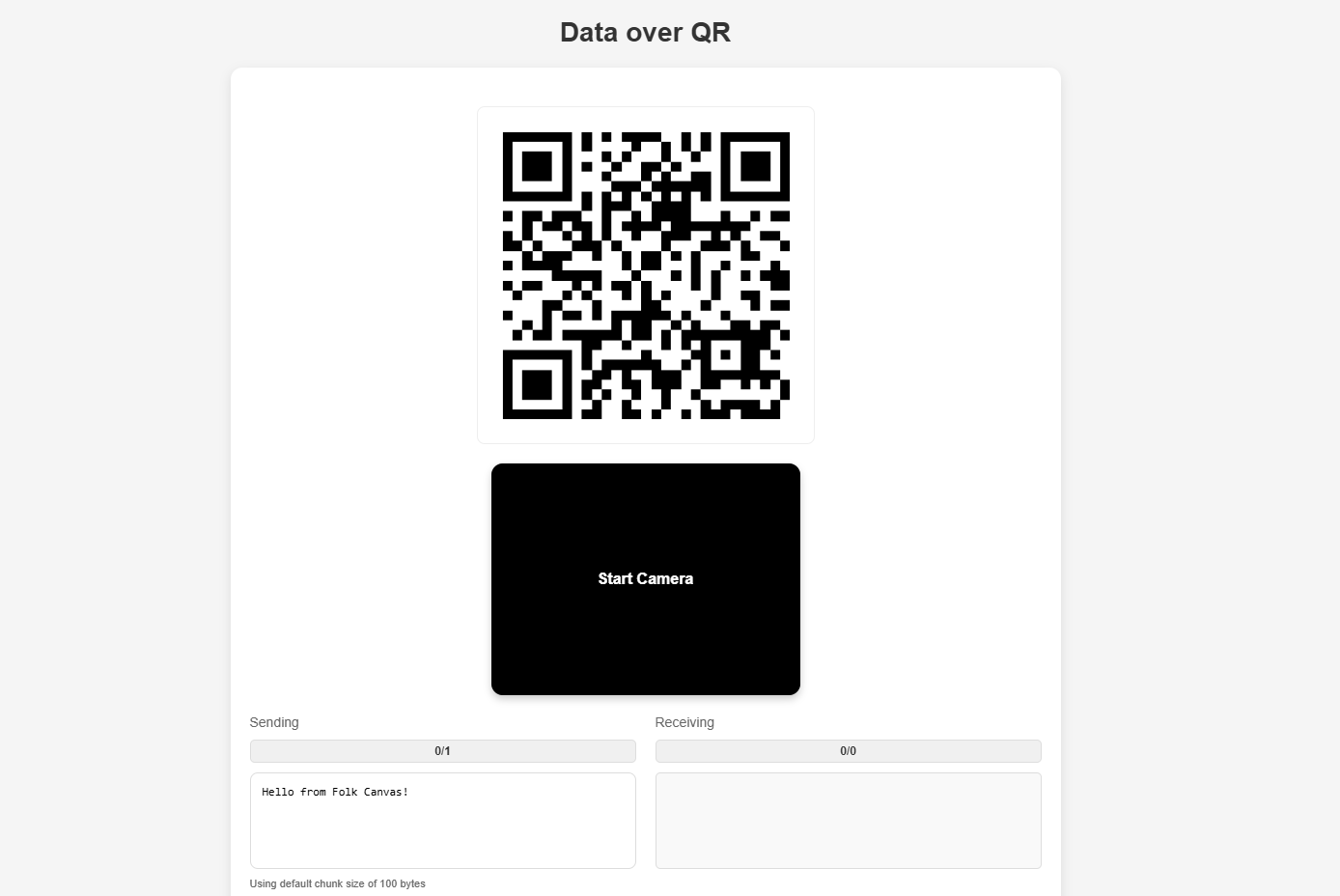
Hace unos días descubrimos una aplicación que permitía enviar información a distancia de un ordenador a otro de forma inalámbrica y que no lo hacía mediante Wifi, ni bluetooth ni ningún otro sistema físico similar, lo hacía mediante QR.
Para ello es necesario disponer de los dos equipos que queremos comunicar y ponerlos uno frente al otro de manera que las webcams puedan verse entre sí.
Entonces, basta con escribir el mensaje en uno de ellos y darle a «ENVIAR DATOS», la aplicación empezará a generar códigos QR que serán recogidos por el otro sistema que lo recibirá y verificará.
El sistema, como bien puedes imaginar, no es muy práctico, de hecho no es ni rápido ni seguro, pero es una frikada muy simpática para demostrar cómo, utilizando WebRTC para manejar la cámara y un poco de ingenio, se puede enviar mensajes a distancia de forma inalámbrica sin necesidad de Wifi ni Bluetooth.
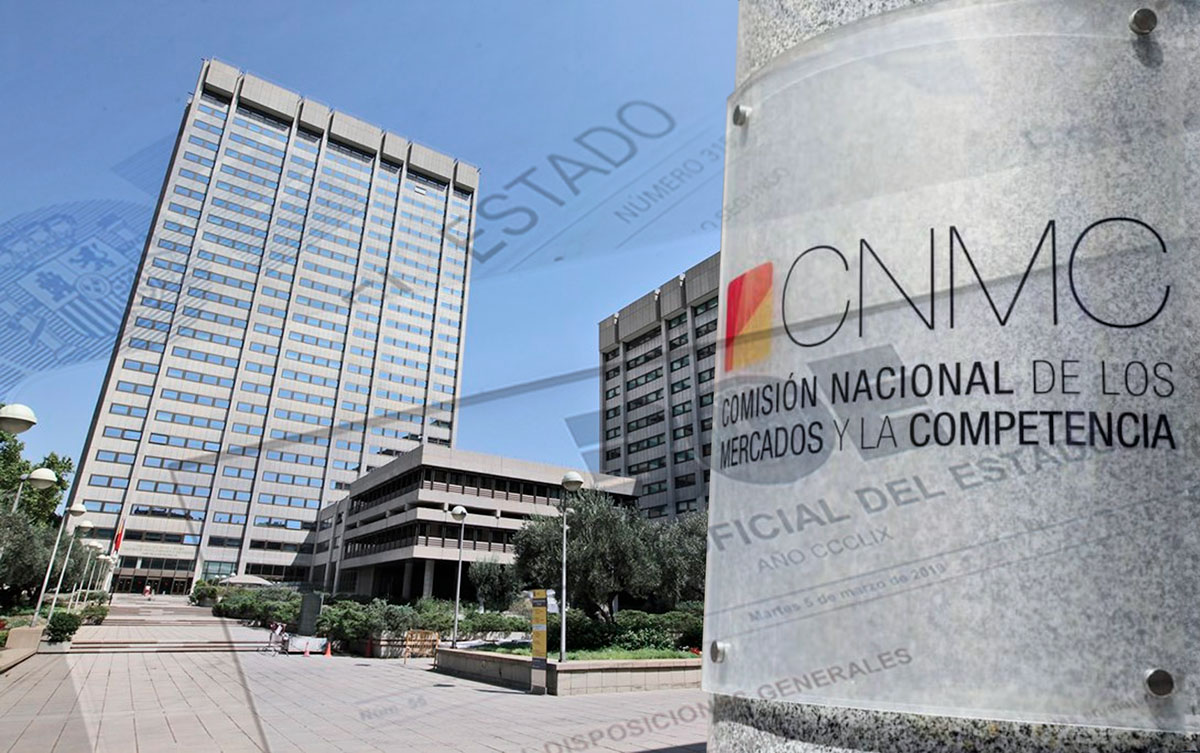
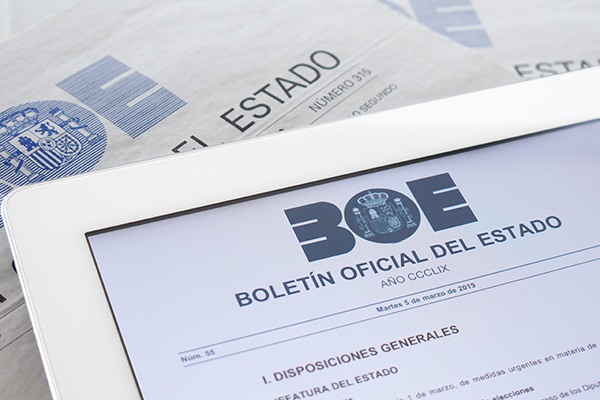
If you are an operator or work in communications, you are likely aware that on Saturday, February 15, the Ministerial Order TDF/149/2025 was issued—somewhat unexpectedly, it must be noted—“establishing measures to combat identity theft scams via fraudulent telephone calls and text messages.” You have probably read dozens of articles outlining the significant change, specifically that “commercial calls from mobile lines will no longer be permitted, and only toll-free numbers (800/900) will be authorized to contact you.” However, the new Ministerial Order TDF/149/2025 includes several minor modifications for operators that affect communications across all types of companies.
The primary objective of this Ministerial Order is to address telephone operators (not data operators) and is primarily aimed at preventing fraud and identity theft scams. In other words, it is designed to prevent scenarios where a scammer calls using your bank’s number or sends an SMS displaying the bank’s name when the sender is not the bank.
Nonetheless, many people consider it a “scam” or “attempted scam” when they receive calls from an unknown number “masquerading” as their telecommunications or energy provider, even though these are commercial calls made by companies contracted by these providers to acquire new customers.
Furthermore, the new Ministerial Order seeks to eliminate this method of customer acquisition. To begin with, it establishes substantial fines for non-compliance, indicating that enforcement will be taken seriously. In addition, the Ministerial Order TDF/149/2025 entails many other important changes in the telephone network, operators, and companies that have been overlooked by clickbait websites. We will now discuss these changes, which are set to significantly alter the industry landscape.
Prohibition on making commercial calls from mobile number ranges.
Let’s first discuss the most striking aspect, which has sparked comments nationwide: starting on June 7 (20 days plus 3 months from the BOE publication), no call center—and, as noted in the BOE, no sales representative from any company (does this mean goodbye to mobile phones for sales reps?)—will be allowed to call you to sell something using a mobile number as they have done until now. As stated in Article 10.1: “The segments N=8 and 9, for the zero value of digits X and Y, of the national telephone numbering plan, in addition to automatic reverse charge services, customer service, and the making of unsolicited commercial calls, are allocated.”
In other words, for customer service numbers as well as for commercial calls, only 800 or 900 reverse charge numbers (with the call cost borne by the recipient company) should be used.
Will commercial calls be allowed from fixed-line numbers?
Although all media outlets have reported that commercial calls may only be made from 900 numbers, it is interesting that the BOE itself does not expressly prohibit fixed-line numbers (it would have been straightforward to clarify and ban both mobile and fixed-line numbers for commercial calls). Only mobile numbering has been explicitly prohibited. However, since this issue was not clearly addressed in the BOE, an update from the Ministry on February 24 also includes fixed-line numbers for commercial calls: “Companies shall not use mobile numbers for telemarketing. They must use geographic numbers or 800/900 numbers, now authorized to make calls.”
To clarify: commercial calls from mobile numbers are prohibited starting May 15 (an updated date also mentioned in the Ministry’s press release), which is slightly earlier than the originally indicated June 7.
It should be noted that 900 numbers are also used for customer service, so if we want to receive calls regarding changes, incidents, or other matters, we need to ensure these numbers are not blocked, otherwise we will not receive any calls.
Let’s clarify an important point: what constitutes an unsolicited commercial call?
Firstly, the BOE refers to “unsolicited commercial calls.” This means that a call center may have your prior consent to call you, but you did not request the call at that moment. Remember that for a call center to contact you, they must have obtained your explicit consent. You likely provided such consent when filling out a form—whether when signing the contract for your bank’s new credit card update, accepting any agreement, creating an account on a website, or making your most recent online purchase.
A commercial call is defined as a call in which someone contacts you exclusively to offer a product or service.
Is a survey a commercial call? No.
Is a call from a political party a commercial call? No.
Is a call from an electricity company informing you of a billing error a commercial call? No.
Is a call from a telecommunications company inquiring about an individual named Jose Emilio who was interested in a service a commercial call? Yes, but if you are not Jose Emilio, it is a misdirected call—a data error rather than a properly targeted commercial call. You may report it; however, since it was caused by erroneous data, it could be considered an “administrative error” (as if I had given consent to be called but provided your phone number instead).
If you registered via a website form and then received a call, this is considered a commercial call. However, since you signed up and provided your consent, the call is permissible—unless you are on the Robinson List, in which case calls are not allowed.
Strict Use of Numbering for Outgoing Calls
Currently, Spanish law prohibits caller ID spoofing. Although some telecommunications experts writing on network forums may disagree, no one is allowed to arbitrarily select any number—even if they have an Asterisk system and wish to identify with someone else’s number. The operator will block such calls and prevent the use of a number that does not belong to the caller. This level of control over numbering is not common in some non-European countries, but in Spain, it is tightly regulated.
Until now, if you have been assigned a telephone number by an operator (for example, your mobile), you could request another operator to allow you to make calls using “your number.” After all, it is your number and you have given authorization for it to be used on your PBX for outbound calls. However, it appears that this practice is coming to an end, or at least it will become much more complex. It will require guarantees that the number in question truly belongs to you, and even then, new legislation will mandate number porting if you wish to place calls through a different operator.
It is also officially prohibited to make calls using numbering that is neither assigned nor sub-assigned to any operator, or that does not belong to any end user. While an operator may prevent one of its subscribers from using numbering that is not allocated within its network, the challenge lies in determining whether an incoming call uses a number that has not been assigned to any user. The BOE does not explain this, yet it mandates that incoming calls using unassigned numbering be blocked. How will it be determined if the incoming number (from another operator) belongs to a subscriber or is an unallocated number? The CNMC will require all operators to provide a list of their subscribers and the numbering they use, and it will develop an API that operators must query each time they receive a call to verify whether that number belongs to someone.
The Ministry has given the CNMC until May 15, 2026, to develop this tool and for operators to begin using it.
This opens up another interesting issue…
As explained in the article on assignment and sub-assignment of numbering, telephone numbers are allocated by the CNMC to network operators, who in turn sub-assign them to other operators for use with their clients and users. Can the sub-assigned numbering from one network operator then be used on another? In principle, yes—it is possible, as network operators could verify that the number belongs to the operator initiating the call. However, how will they determine whether that number actually belongs to a valid user or is unassigned? The CNMC will need to clarify these uncertainties.
Only numbering that has been previously assigned or sub-assigned will be used.
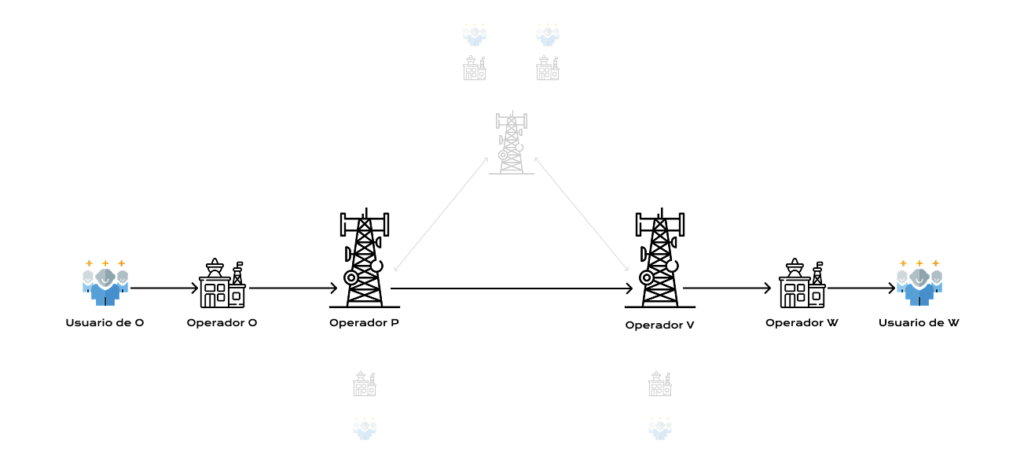
As explained in the article on “what assignment and sub-assignment mean,” there are many operators (let’s call them P) (transit operators) who, instead of sub-assigning numbering, allocate numbers as if they were for their end users. This practice has always been overlooked; however, now transit operators (both Operator P and Operator V) must block such numbering, since it does not belong to Operator O.
Forbidden Use of One Operator’s Numbering on a Different Operator
The new Ministerial Order mandates that operators block incoming calls if the numbering belongs to the operator that is the intended recipient of the call.
For example, consider the case of Jaime, who uses an IP operator for his company’s calls. He wishes to make calls using the number associated with his Movistar fiber connection, so he contacts his IP operator, TuOperadorIP, to enable the use of his Movistar number in addition to the operator’s own numbering. After sending his invoices and signing two contracts, TuOperadorIP grants him the ability to place calls using the Movistar fiber number.
Up to this point, everything proceeds normally. Jaime utilizes TuOperadorIP for outbound calls, as his PBX is configured accordingly, allowing him to use his fiber number. Incoming calls are directed to the office landline, and all functions smoothly.
However, when Jaime calls his wife’s mobile phone—which is also with Movistar—Movistar suddenly blocks the call. Why? Because Movistar is invoking the new law that permits them to block calls if the call originates from an external provider and the number is registered to Movistar.
Therefore, it is prohibited to call a Movistar user using a provider other than Movistar if the Movistar numbering is used.
How is this issue resolved? The solution is to “port the number” to the operator with which you wish to make calls. This matter could spark an interesting debate, as many users are unable to port their number because their primary number is tied to their fiber line. In short, this is yet another reason to decouple the number we favor from the fiber connection.
Forbidden Use of National Fixed-Line Numbering for International Calls and Companies
According to the interpretation of the BOE, the use of national numbering for international calls is also prohibited.
In a VoIP environment, where all calls are made over an IP network, “international calls” are defined as those originating from non-national companies.
While a mobile number can belong to a foreign individual, a fixed-line contract requires the physical presence of a national address. Therefore, it is not permitted for foreign companies to present international calls using national fixed-line numbering. This effectively prohibits the assignment of fixed/geographic numbering to companies that are not physically located in Spain or that do not have a headquarters or representative office in the country. Although this was already the case, enforcement will now be much stricter. If a foreign company wishes to obtain national fixed-line numbering in a specific province, it must have a branch in that province, necessitating some form of corporate documentation (e.g., an invoice) with an address in that province.
This measure aligns with practices already in place in several European countries (such as Portugal, France, and Germany), whereas in Spain, until now, companies could obtain Spanish numbering without having a physical domicile in the country.
Strict Limitation and Strict Control of SMS Origin
Although it may seem odd (I’ve always found it curious), SMS messages have traditionally enjoyed a certain degree of freedom. SMS has essentially been «a message sent to a mobile phone,» where the originating field (the «from» field) served merely as an identifier and never as a means of authorization. This means that it has been possible to send SMS messages with any origin, including names (aliases) to help the recipient identify who is sending the message.
However, as is often the case, freedom is highly valued—but great power comes with great responsibility. When that power is misused to cause harm, it becomes necessary to impose limits on such “freedom” and exercise tighter control over who is permitted to do what.
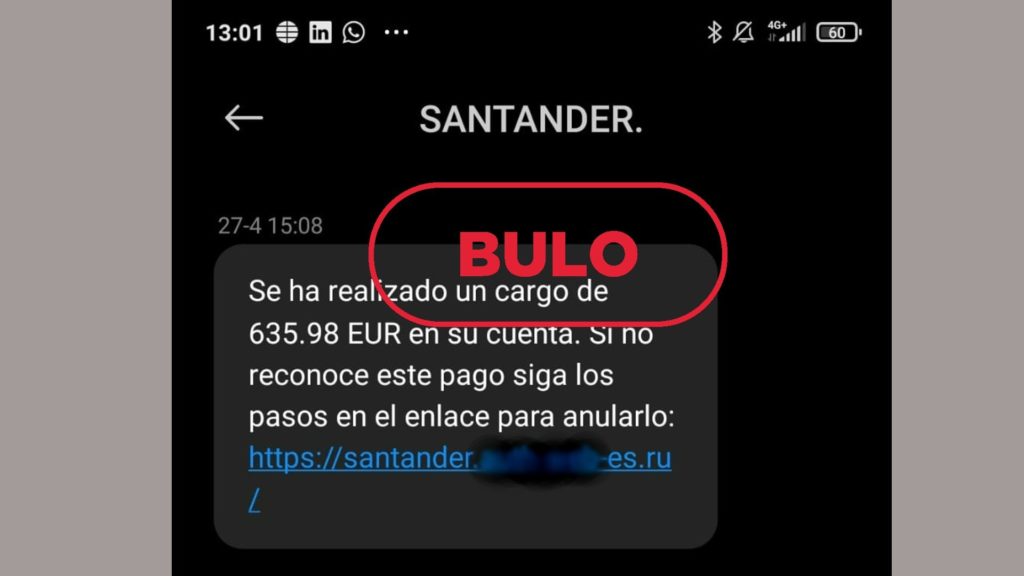
For this reason, SMS messages have increasingly been used as a vector for scams, tricking individuals into visiting fraudulent websites, submitting personal data, or even initiating bank transfers. Consequently, the Ministerial Order includes a specific section on the proper use of SMS to help prevent scams and fraud.
Mandatory Use of a Public Registry for ‘Alias’ Usage in Caller Identification
In light of the fact that this functionality has been exploited to commit numerous crimes and frauds, the origin of the SMS will be restricted to the telephone number of the user or company sending the message. If an alias is to be used, that name must be registered in an official registry associated with the sending company. Essentially, this measure is designed to prevent third parties from sending messages under aliases such as “BANK XXXXXXX” to defraud users.
What About RCS Messages? There was an expectation that RCS messages would help address this issue. According to some reports, it was believed that RCS would eventually replace SMS. RCS messages require a bureaucracy (verifiers, documentation, contracts, etc.) to ensure that the sender can be correctly identified and that the message is authorized and verified by a controlling entity. One problem, however, is that RCS is largely managed by external companies like Google (or Huawei), meaning that the identification, verification, and certification policies are based on these external entities. With this change, SMS will be granted much greater control and security, with operators and the CNMC overseeing that companies send SMS with their official identification.
The Ministry has given the CNMC just over a year—until May 15, 2026—to develop the tool for registering alphanumeric codes in SMS.
A Brief Opinion…
I cannot deny that if these measures help reduce spam—especially for those enrolled in the Robinson List—it will be a positive outcome. However, my primary hope is that these measures will help prevent fraud and deception.
Unfortunately, not all laws in this country have managed to stop us from receiving automated calls with job offers, even though it would be quite easy to identify who is behind those calls. Thus, if the prosecutor’s office, the police, the CNMC, the AEPD, and the Ministry of Digital Transformation cannot prevent these calls, the only recourse may be to enact laws that force operators to cease these activities under the threat of hefty fines.
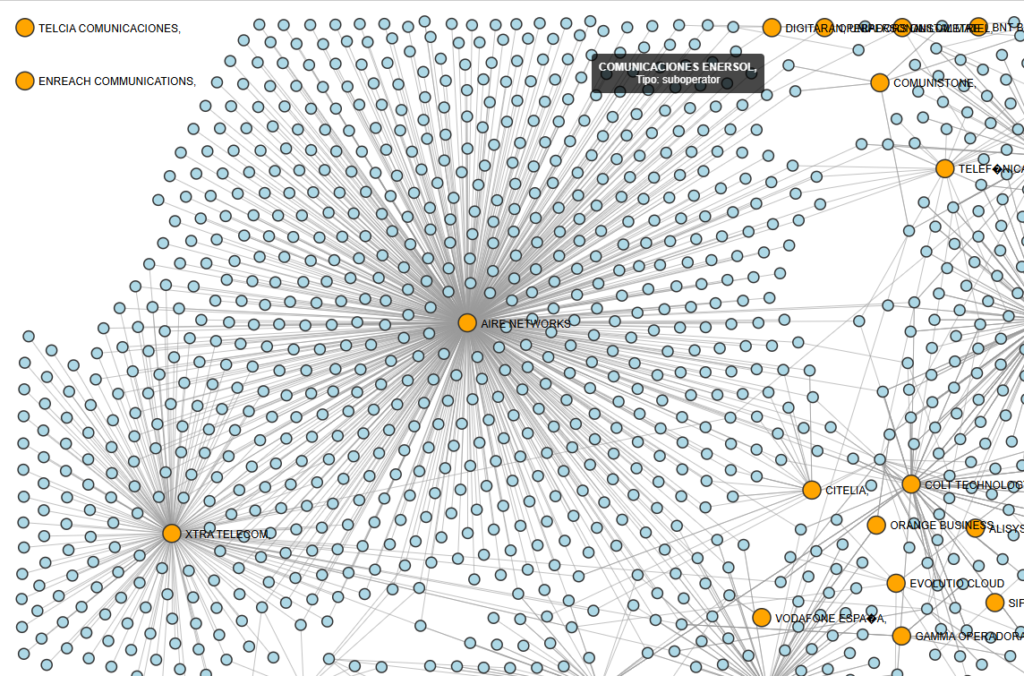
Requiring operators to generate semi-annual blocking reports, to consult databases for every received call, and to implement so many changes in their infrastructure that it becomes an odyssey… this is what awaits us from now on. Only those operators with an engineering department capable of carrying out the necessary infrastructure modifications will be able to comply with the BOE’s requirements. Otherwise, they will have to rely on larger network operators to support and assist them with the extensive list of changes that must be implemented within months.
Out of the nearly 1,000 telephone operators registered with the CNMC, how many do you think control their infrastructure well enough to modify their systems to adapt to these changes? The majority will likely reuse services from larger operators to avoid legal issues.
I foresee very intense and interesting changes and movements among the country’s telephone operators this year.
Si eres un operador o te dedicas a las comunicaciones ya sabrás que el sábado pasado 15 de febrero, apareció (un poco a traición, todo hay que decirlo) la Orden Ministerial TDF/149/2025 «por la que se establecen medidas para combatir las estafas de suplantación de identidad a través de llamadas telefónicas y mensajes de texto fraudulentos«. Seguramente ya habrás leído decenas de artículos explicando el gran cambio y es que «no te podrán hacer llamadas comerciales desde líneas móviles y sólo podrán llamarte desde números gratuitos (800/900)» pero la nueva Orden Ministerial TDF/149/2025 viene cargada de pequeñas modificaciones para los operadores que afectan a las comunicaciones de todo tipo de empresas.
Lo primero es que esta Orden Ministerial está orientado a los operadores de telefonía (no a los operadores de datos) y se hace principalmente para evitar el fraude y las estafas de suplantación de identidad. Esto es: que te llamen con el número de tu banco cuando realmente sea un estafador, o que te manden un SMS con el nombre del banco cuando realmente no sea el banco. No obstante, mucha gente considera «estafa» o «intento de estafa» que le llamen desde un número desconocido «haciéndose pasar» por su operadora de telecomunicaciones o de energía, cuando realmente son llamadas comerciales hechas por empresas contratadas por estas para conseguir nuevos clientes.
Aún así, la nueva Orden Ministerial ha aprovechado y quiere acabar con esta forma de conseguir cliente. Para empezar, se establecen multas cuantiosas para quien las incumpla, así que esta vez parece que se lo van a tomar en serio. No obstante, la Orden Ministerial TDF/149/2025 conlleva muchos otros cambios importantes en la red de telefonía, operadores y empresas que han pasado desapercibidas por páginas webs que sólo buscan el clickbait, así que vamos a hablar de ellas y veréis que estos cambios vienen a cambiar bastante las reglas del juego.
Prohibición de realización de llamadas comerciales desde numeración móvil.
Vamos a hablar primero de lo más llamativo, lo que hace que los titulares de todo el país se llenen de comentarios y es que a partir del 7 de junio (20 días + 3 meses desde la publicación del BOE) ningún callcenter, y si nos fijamos bien en lo que dice el BOE, tampoco podrá ningún comercial de ninguna empresa (¿adiós a los móviles de los comerciales?) podrá llamarte para venderte algo usando un número móvil como hasta ahora. Tal y como dice el artículo 10.1: «Se atribuye los segmentos N=8 y 9, para el valor cero de las cifras X e Y, del plan nacional de numeración telefónica, además de a los servicios de cobro revertido automático, a los servicios de atención a clientes y a la realización de llamadas comerciales no solicitadas.«. Es decir, para números de atención al cliente, así como para llamadas comerciales, se deben utilizar números 800 o 900 de «cobro revertido» (la llamada la paga empresa a la que se llama).
¿Podrán hacerse llamadas comerciales desde numeración fija?
Pese a que en todos los medios han publicado que únicamente se podrán hacer llamadas comerciales desde números 900, es curioso que el BOE como tal no lo prohíbe expresamente, (con lo fácil que hubiera sido dejarlo claro y prohibir la numeración movil «y fija» para la realización de llamadas comerciales), sólo han prohibido expresamente la numeración «móvil«. No obstante y visto que este tema no estaba claro en el BOE, una actualización del ministerio del 24 de febrero incluye también la numeración fija para hacer llamadas comerciales: «Las empresas no podrán usar números móviles para telemarketing. Deberán emplear numeración geográfica o números 800/900, ahora habilitados para emitir llamadas.«
Así que, aclarando esto un poco: Se prohíbe hacer llamadas comerciales desde numeración móvil desde el 15 de mayo (fecha actualizada también en la nota de prensa del ministerio). Un poco antes que el 7 de junio inicial.
Hay que decir que los 900 también es el número de teléfono de atención al cliente, por lo que si queremos que nos llamen para informarnos de algún cambio, alguna incidencia u otra cosa, necesitaremos no bloquear dichos números o no recibiremos ninguna llamada.
Vamos a aclarar algo importante: ¿Qué es una llamada comercial no-solicitada?
Lo primero es que el BOE hace referencia a «llamadas comerciales no solicitadas» esto significa que un callcenter tiene tu consentimiento para poder llamarte, pero tu no has solicitado que te llamen en este momento. Recordemos que para que un callcenter te pueda llamar, deben tener tu consentimiento previo. Esto seguramente lo hayas dado al darte de alta en algún formulario: al firmar el contrato de la actualización de la nueva tarjeta de crédito del banco, al aceptar algún contrato, al crearte una cuenta en alguna web o al realizar la última compra que has hecho en una tienda online.
Una llamada comercial es una llamada en la que una persona te llama para ofrecerte un producto o servicio. EXCLUSIVAMENTE ESO.
¿Una encuesta es una llamada comercial? NO.
¿Una llamada de un partido político es una llamada comercial? NO.
¿Una llamada de una compañía eléctrica diciéndote que hay un error en tu factura es una llamada comercial? NO.
¿Una llamada de una empresa de telecomunicaciones preguntando por un tal Jose Emilio que estaba interesado en un servicio es una llamada comercial? SI, pero como no eres tú Jose Emilio, es un error de llamada, un error de los datos, no es una llamada localizada, por lo tanto puedes denunciar, pero como ha sido una llamada con datos erroneos, se podría considerar un «error administrativo». (como si yo doy el consentimiento para que me llamen y pongo tu número de teléfono)
Te has dado de alta en un formulario en una página web y te han llamado ¿esto es una llamada comercial? SI, pero como te has dado de alta y has firmado el consentimiento pueden llamarte. Si estás en la Lista Robinson entonces NO pueden llamarte.
Uso estricto de la numeración para llamadas salientes.
Actualmente la ley española prohíbe falsear el identificador de la llamada. Aunque esto contradiga algún experto en telefonía que escribe en páginas sobre redes… cualquiera no puede ponerse el número que quiera, aunque tenga un Asterisk y se quiera identificar con el número de su cuñado. El operador le bloqueará esa llamada esa llamada e impedirá que utilice un número que no le pertenece. No es así en otros países de fuera de Europa, pero en España, el uso de la numeración está bastante controlada.
Hasta ahora, si yo tengo asignado un número de teléfono en un operador (mi móvil por ejemplo), podría solicitar a otro operador poder hacer llamadas utilizando «mi número». Al fin y al cabo, es mi número y doy mi autorización para poder usarla en mi centralita y poder llamar usando este número. No obstante, parece que eso se acaba ahora o será mucho más complejo. Requerirá de garantías de que ese número es tuyo, y aún así, la nueva legislación te obligará a portar el número en caso de querer sacar llamadas con otro operador diferente.
Queda también oficialmente prohibido hacer llamadas con numeración que no está asignada o subasignada a ningún operador, o que no pertenezca a ningún usuario final. Claro que un operador puede impedir que un usuario suyo utilice numeración que no está siendo utilizada dentro de su red pero, ¿cómo sabe si una llamada entrante utiliza un número que no ha sido asignado a ningún usuario? Tampoco lo explica el BOE y éste obliga a bloquear las llamadas entrantes con numeración no asignada a ningún usuario. ¿Cómo se sabrá si el número entrante (de otro operador) pertenece a un abonado o es un número líbre? La CNMC solicitará a todos los operadores la lista de abonados que tienen, así como la numeración utilizada y elaborará una API donde, como operador, habrá que consultar cada vez que se reciba una llamada, para saber si ese número pertenece a alguien o no.
El ministerio le da de plazo a la CNMC hasta el 15 de mayo de 2026 para que elabore esta herramienta y los operadores comiencen a utilizarla.
Esto abre otro melón interesante…
Tal y como explicamos en el artículo de asignación y subasignación de numeración, la numeración telefónica es repartida por la CNMC a los operadores de red, y estos a su vez la subasignan al resto de operadores para que la utilicen con sus clientes y usuarios. Un operador puede tener subasignada numeración de varios operadores de red diferentes. ¿Puede entonces utilizar la numeración subasignada por un operador de red en otro? En principio sí podría, ya que los operadores de red podría comprobar que esa numeración pertenece al operador que inicia la llamada, pero ¿Cómo sabrá si ese número es realmente de un usuario válido o si pertenece a ningún usuario? Habrá que preguntar a la CNMC que nos aclaren ciertas dudas…
Sólo se utilizará numeración que haya sido previamente asignada o subasignada.
Tal y como explicamos en el artículo de «qué significa asignación y subasignación«, hay muchos operadores (llamémosle P) (operadores de tránsito) que, en lugar de subasignar numeración, asignan números como si fueran para sus usuarios finales. Esto siempre se ha pasado por alto, no obstante, ahora los operadores de tránsito (tanto Operador P como el Operador V) deberán bloquear esa numeración al no pertenecer dicha numeración al operador O.
Prohibido utilizar numeración de un operador en otro operador diferente.
La nueva Orden Ministerial obliga a los operadores a bloquear llamadas entrantes con numeración que pertenezca al operador receptor de la llamada.
Vamos a intentar poner un ejemplo: Jaime utiliza un operador IP para las llamadas de su empresa. Quiere poder hacer llamadas con el número de su fibra Movistar, así que habla con su operador IP TuOperadorIP para que, además la numeración propia de este operador, le permita hacer llamadas con este número. Le manda las facturas, firma dos contratos y TuOperadorIPle habilita la posibilidad de sacar llamadas utilizando el número de la fibra de Movistar. Hasta ahí todo es normal. Jaime usa TuOperadorIP para sacar llamadas porque ya lo tiene configurado en su centralita y así puede usar el número de su fibra. Las llamadas entrantes entran en el fijo de la oficina y todos contentos. Ahora Jaime llama al móvil de su mujer que también es Movistar, y de repente Movistar bloquea esa llamada. ¿por qué? Porque Movistar se acoge a la nueva ley que le permite bloquear llamadas, si la llamada viene de un proveedor externo y el número está asignado a Movistar.
Por lo tanto, queda prohibido llamar a un usuario de Movistar, usando un operador diferente de Movistar, si se utiliza numeración de Movistar.
¿Cómo se soluciona esto? La solución es «portar el número» al operador con el que quieres hacer las llamadas. Este tema daría para un debate interesante, ya que muchos usuarios no pueden portar su numeración porque tienen el número principal asociado a su línea de fibra,… En fin, otra razón más para quitar la asociación del número que nos gusta a la línea de la fibra.
Prohibido utilizar numeración fija nacional en llamadas y empresas internacionales.
Según la interpretación del BOE, también queda prohibido la presentación con numeración nacional de llamadas internacionales. ¿Qué son llamadas internacionales en un entorno VoIP donde todas se hacen desde una red IP? Pues aquellas que se originan por empresas no nacionales
Un número móvil si puede pertenecer a una persona extranjera, pero el contrato de un número fijo exige la presencia física de una dirección nacional, por lo tanto no se permite presentar con numeración nacional llamadas realizadas por empresas extranjeras. (prohibición de dar numeración fija/geográfica a empresas que no están físicamente en España o que no tengan sede u oficina de representación en España). (esto ya era así, pero ahora llevarán un control mucho más estricto). Si una empresa extranjera quiere tener numeración nacional fija de una provincia, debe tener una sede en dicha provincia, por lo que será necesario algún tipo de factura de empresa con una dirección en esa provincia.
Esto es algo que ya se venía haciendo en muchos países europeos (Portugal, Francia, Alemania, etc.) pero en España se ve que aún se permitía que una empresa pudiera tener numeración española sin tener un domicilio en el país.
Limitación y control estricto del origen de los SMS
Aunque pueda parecer extraño (a mí siempre me lo ha parecido), los SMS han disfrutado siempre de cierta libertad, y es que los SMS no han sido más que «un mensaje que se envía a un móvil», el campo de origen (el from) servía para identificar pero nunca para autorizar, esto significa que se puede enviar SMS con el origen que queramos, incluso se permiten nombres (alias) para ayudar al que lo recibía a identificar quién lo estaba enviando.
Como siempre, la libertad es muy deseada, pero un gran poder conlleva una gran responsabilidad y cuando este poder se utiliza para hacer el mal, toca poner límites a esa «libertad» tan deseada y controlar más quién puede hacer qué.
Por esta razón se han venido usando los SMS para conseguir engañar a personas a acceder a páginas fraudulentas, introducir datos personales o incluso para realizar transferencias bancarias, por lo que la Orden Ministerial lleva un apartado especial para el uso correcto de los SMS y evitar estafas y fraudes como los que se venían cometiendo.
Uso obligatorio de un registro público para el uso de ‘alias’ en el identificador.
A la vista de que esta funcionalidad ha sido utilizada para cometer muchos delitos y estafas, se restringirá el origen al número de teléfono del usuario/empresa que envía el mensaje. En caso de querer enviar un ALIAS, éste nombre deberá ser registrado en un registro oficial asociado a la empresa que envía el SMS. Básicamente para evitar que un tercero envíe un mensaje con el alias «BANCO XXXXXXX» y así cometer fraudes a usuarios.
¿Los mensajes RCS no venían para ayudar a esto?
Según me comentan por otro lado, se confiaba en que los mensajes RCS sustituyeran a los SMS. Éstos requieren de una burocracia (verificadores, documentos, contratos, etc.) para que quien envía el mensaje pueda identificarse correctamente y su envío sea autorizado y verificado por una empresa que controla quien envía el mensaje. ¿uno de los problemas? los RCS básicamente los gestiona Google (o Huawei) y por lo tanto, la política de identificación, verificación y certificación se basa en empresas externas. Con este cambio se le otorga mucho más control y seguridad a los SMS y son los operadores y la CNMC quien controla que las empresas envían SMS con su identificación oficial.
El ministerio le da algo más de un año a la CNMC para que elabore la herramienta para el registro de códigos alfanuméricos en los SMS. (a partir del 15 de mayo de 2026).
Una breve opinión…
No voy a negar que si estas medidas contribuyen a que deje de recibir spam de todo tipo estando de alta en la Lista Robinson, será positivo. Pero sin duda, lo que deseo es que estas medidas ayuden a impedir los fraudes y los engaños.
Por desgracia, ni todas las leyes de este país está impidiendo que recibamos llamadas automáticas con mensajes de ofertas de trabajo, con lo fácil que sería descubrir quién está detrás de esas llamadas, así que si la fiscalía, la policía, la CNMC, la AEPD y el Ministerio de transformación digital no consiguen evitar este tipo de llamadas, lo único que pueden hacer es crear leyes para obligar a los operadores a parar estas acciones bajo grandes multas.
Obligar a los operadores a generar informes semestrales de bloqueos de llamadas, a consultar bases de datos por cada llamada recibida, a realizar tantos cambios en su infraestructura que se convierta en una odisea… eso es lo que nos espera a partir de ahora. Sólo aquellos operadores que cuenten con un departamento de ingeniería capaces de llevar a cabo los cambios en la infraestructura, podrán cumplir con lo que el BOE necesita. En caso contrario, dependerán de sus operadores de red que les cubran y les ayude ante la lista de cambios que hay que cumplir en cuestión de meses.
De los casi 1000 operadores de telefonía dados de alta en la CNMC ¿Cuántos creéis que controlan su infraestructura como para llegar a hacer las modificaciones en sus sistemas para adaptarse a estos cambios? La mayoría reutilizarán servicios de otros operadores más grandes para ahorrarse problemas legales.
Preveo cambios y movimientos muy intensos e interesantes este año en el conjunto de operadores de telefonía de este país.
It is clear that sending a photo of our ID to anyone over the internet is a bad idea: we run the risk of it being stolen, copied, or ending up in the wrong—or a stranger’s—hands, where someone could impersonate us, authorize transactions, or carry out illegal activities on our behalf.
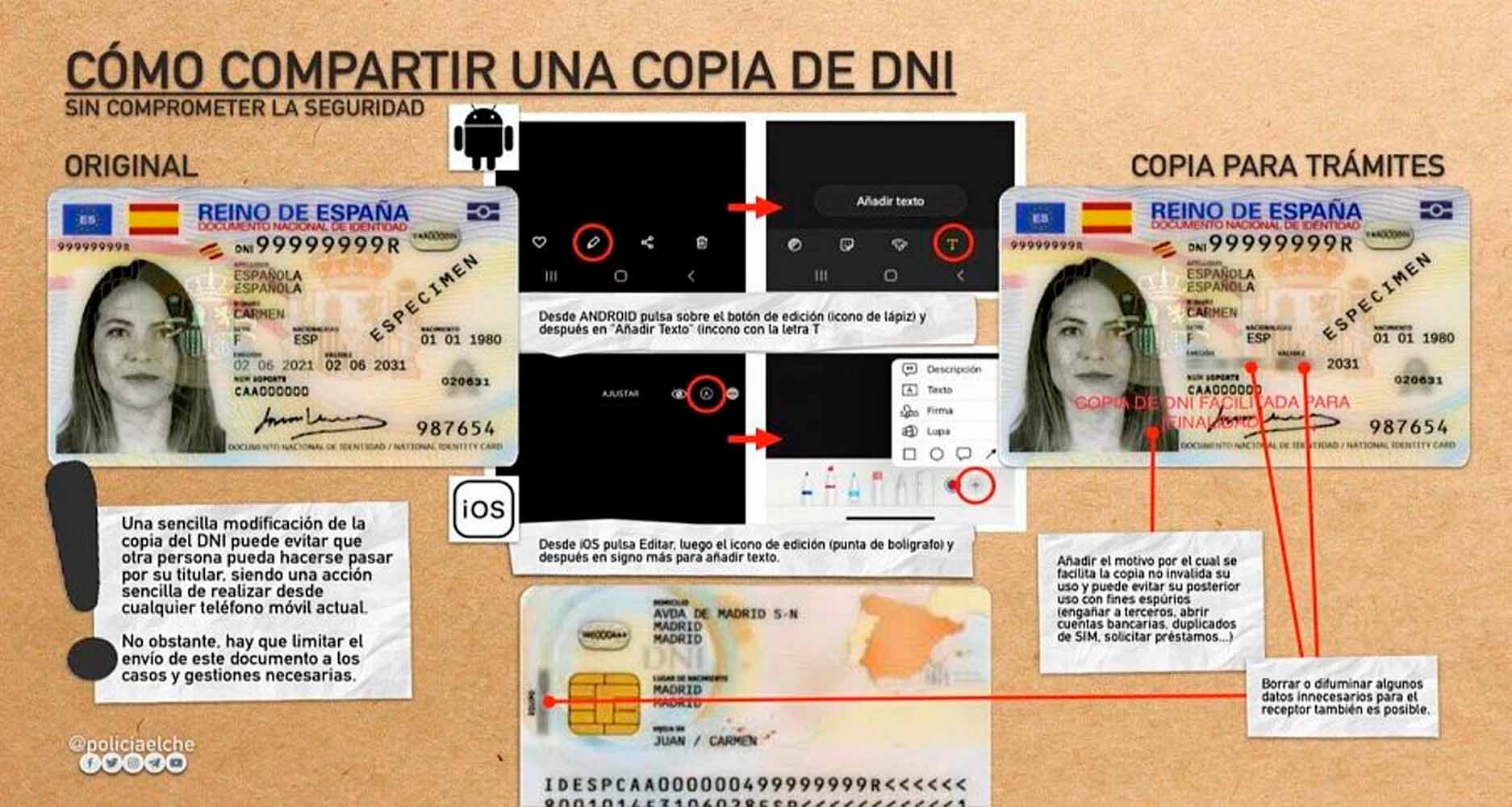
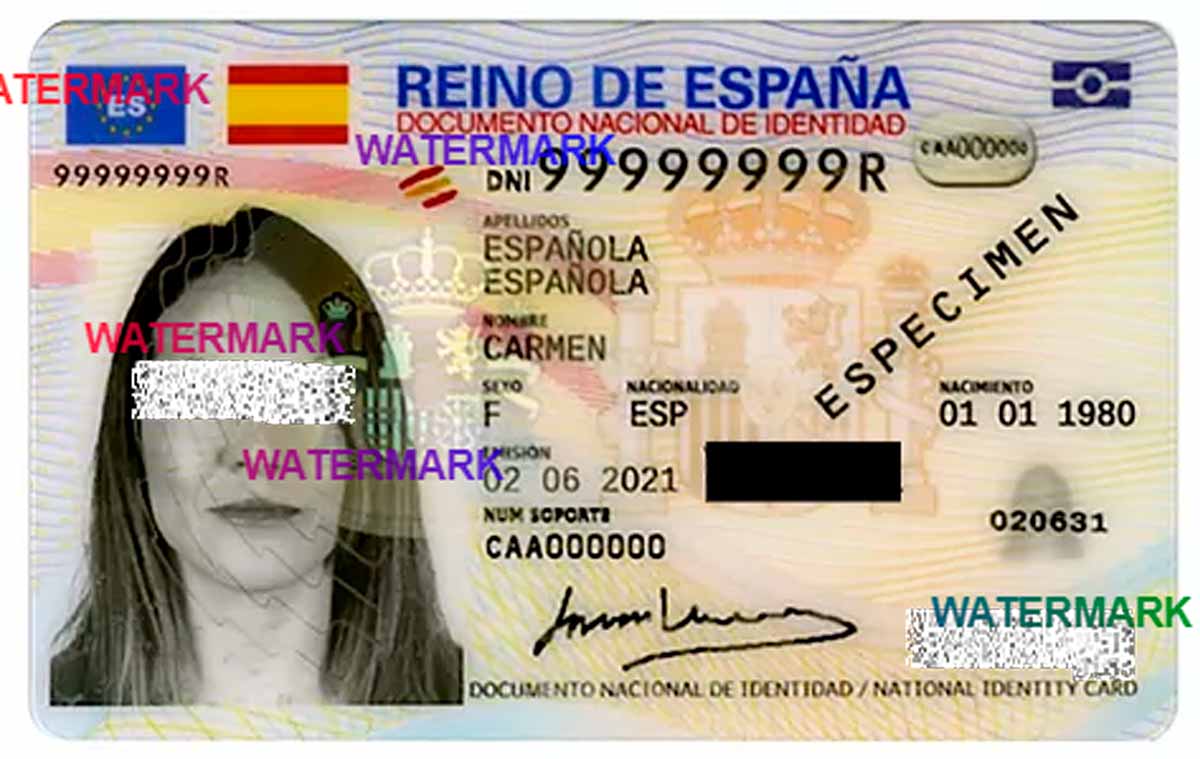
Unfortunately, there are procedures that require us to submit data from our ID, so it’s better to use a black-and-white photo with some of the information pixelated and a watermark indicating its authorized use.
It might seem like something any photo editing application could handle, but there have been times when I needed to send an ID immediately and didn’t have time to add a watermark.
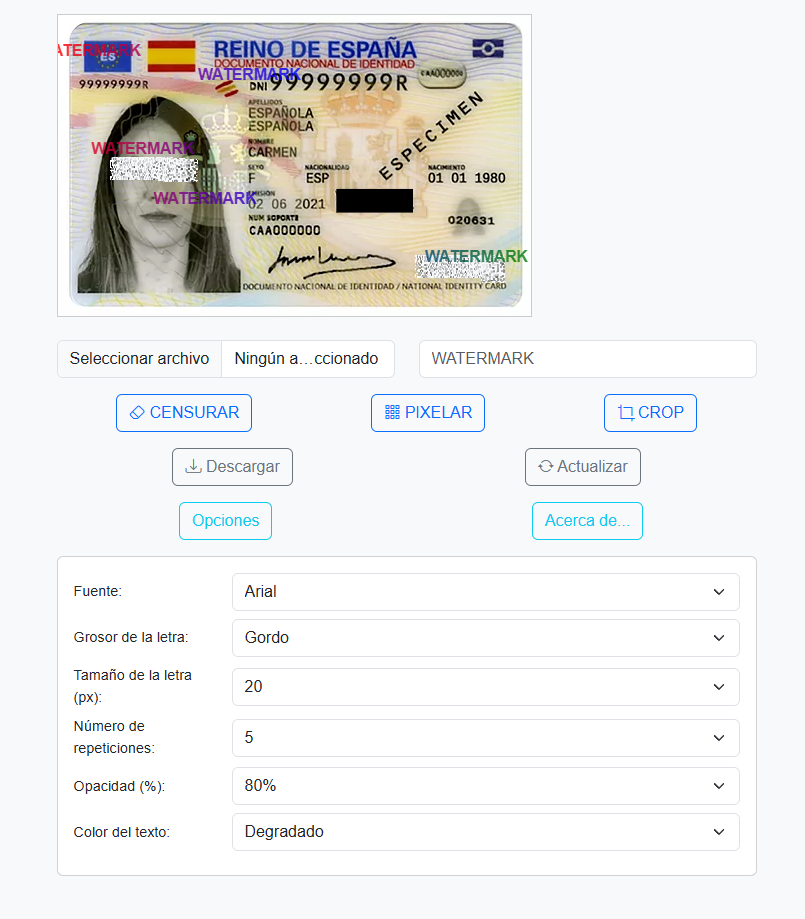
For this reason, I have created a tool to add a watermark to our photos of our ID, passport, or any other identification document, featuring several interesting characteristics:
First and foremost: No image is ever shared; all editing is done using JavaScript in your own browser, making it completely secure.
It allows you to edit, censor, pixelate, or crop any part of the image you need, so you can conceal portions of your identifier.
You can fully customize the watermark: add any text you want, select the font, size, thickness, the number of times it appears, the color of the watermark, its opacity, etc.
This will generate your own modified image, ready to be shared with all the changes you have made.
Es evidente que es una mala idea enviar una foto de nuestro DNI a cualquier persona por internet: corremos el riesgo de que se lo roben, lo copien o acaben en malas manos o manos de extraños y que nos suplanten, autoricen trámites y hagan actividades ilegales en nuestro nombre.
Por desgracia, hay trámites que nos obligan a mandar datos de nuestro DNI, por lo que es mejor usar una foto en blanco y negro, con parte de la información pixelada y con una marca de agua que indique para qué uso se está autorizando.
Puede parecer algo fácil de hacer con cualquier aplicación de retoque fotográfico, pero en alguna ocasión me ha ocurrido que he necesitado enviar un DNI en el momento y sin darme tiempo a rellenar la marca de agua.
Por esta razón, he creado una herramienta para ponerle una marca de agua a nuestras fotografías de nuestro DNI, Pasaporte o cualquier otro documento de identificación con varias características interesantes:
La primera y más importante: No se comparte ninguna imagen, toda la edición se hace mediante Javascript en tu propio navegador, así que es completamente seguro.
Permite editar, censurar, pixelar o recortar un trozo de la imagen que necesites, así puedes ocultar parte de tu identificador.
Puedes personalizar completamente la marca de agua: Poner el texto que quieras, seleccionar la letra, el tamaño, el grosor, el número de veces que queremos que aparezca, el color de la marca de agua, la opacidad, etc.
Esto generará tu propia imagen modificada y lista para compartir con las modificaciones que le hayas hecho.
Tengo que decir que esta herramienta la he hecho principalmente para mí, pero si alguien más le viene bien, puede usarla cuando quiera. Puedes guardarla en los favoritos y usarla cuando te haga falta. 😉
La página funciona tanto en un navegador móvil como un escritorio. Utiliza HTML5, javascript y canvas para modificar la imagen en el propio navegador, así que en ningún momento se sube la imagen a ningún sitio. Esto es imprescindible, ya que pueden haber aplicaciones de terceros que hagan algo similar pero que sí guarden la imagen en el servidor para aplicar las ediciones o los cambios. En este caso, todo se ejecuta en tu propio navegador móvil, así que la seguridad es cosa de tu propio móvil.
Just a few days after the new President of the United States announced he would allocate 5 billion dollars to the main American companies dedicated to AI (OpenAI, Microsoft, Google, Meta, X, etc.), a Chinese company went ahead and published an AI model called DeepSeek-R1 under a free license. To be specific, many models are “open source,” which means their source code is open, but in practice, they are under very restrictive licenses (in Europe, for example, certain uses are prohibited…). In contrast, the DeepSeek-R1 license is truly a FREE model under the MIT license, one of the most widely used licenses by free software enthusiasts.
However, what has sparked a war of AI models is the fact that DeepSeek appears to be much more optimized and not only runs faster than ChatGPT, but also requires less computing hardware to function, meaning practically anyone could have their own complex LLM system with reasoning capabilities using just a simple graphics card costing no more than €200.
Of course, DeepSeek offers an online version that people can use completely free of charge. It also has a (commercial) API to use the reasoning version (similar to the GPT4-o1 model), though at a slightly lower cost than OpenAI’s API.
It seems that the United States wants to start its own “AI space race” against China, but the latter has just launched its first rocket to the Moon, leaving the U.S. with a 400 billion-dollar hole in the stock of the company that manufactures the most-used hardware for AI: NVIDIA.
In the United States:
GPT-4 by OpenAI: GPT-4 is a large-scale language model that has set new standards in natural language processing, text generation, and contextual understanding. Its ability to generate coherent and relevant content has been widely recognized.
Gemini 2.0 by Google DeepMind: Gemini 2.0 is a multimodal model that integrates text, image, and audio processing. It stands out for its advanced reasoning and understanding capabilities, enabling applications in various areas such as information retrieval and virtual assistance.
Claude by Anthropic: Claude is a language model focused on safety and alignment with human values. It has been used in applications requiring secure and ethical interactions, contributing to responsible AI development.
Grok-2 by xAI: From Elon Musk’s company, Grok-2 is a language model that integrates with platforms like X (formerly Twitter) to enhance interaction and content generation. Its focus on social media integration distinguishes it in the AI landscape.
Llama 3 by Meta AI: Introduced in April 2024, Llama 3 is the latest version in Meta’s series of large language models. Available in 8 billion and 70 billion parameter versions, it outperforms other open-source models in various benchmark tests.
In China:
DeepSeek-R1: Developed by the startup DeepSeek, this reasoning model has surprised the tech sector with its efficiency and low cost. DeepSeek-R1 has surpassed competitors like OpenAI in terms of downloaded applications, demonstrating that advanced AI development does not require huge investments.
Qwen 2.5-Max by Alibaba: The tech giant Alibaba recently launched its Qwen 2.5-Max model, which claims to outperform advanced models like DeepSeek-V3, OpenAI’s GPT-4o, and Meta’s Llama-3.1-405B. This release highlights Alibaba’s rapid evolution in the AI field.
Ernie Bot by Baidu: Baidu, known for its search engine, has developed Ernie Bot, a conversational AI model that has been integrated into various applications, demonstrating advanced natural language processing capabilities.
Hunyuan by Tencent: Tencent, the company behind WeChat, created the AI model Hunyuan, which has been integrated into its messaging platform to improve interactions and provide more accurate responses to users.
Kimi k1.5 by Moonshot AI: Moonshot AI has developed the Kimi k1.5 model, known for its multimodal and reasoning capabilities, positioning itself as a competitive alternative in the AI market.
The Importance of AI in Europe…
Meanwhile, in Europe, we are watching how various players are striving to lead in AI, waiting in astonishment to see who will achieve supremacy in a technology that, as anyone can imagine, will be as revolutionary as the internet was in its day.
The European Parliament has already worked on creating specific legislation for AI in Europe, classifying models based on their “danger level,” establishing a “testing space” to study whether algorithms are dangerous or not, and similar measures. The legislation itself is not bad; it merely seeks to ensure that AI is safe, ethical, and respectful of fundamental rights. However, some companies consider that the obligations imposed are too demanding and could hinder innovation. To express their opposition to this “control,” they opt to ban the use of their technology in Europe, thereby pressuring authorities to relax its use on the old continent.
Whatever the case may be, Europe is currently lagging behind in this technological race for AI leadership. It’s nothing new; the same thing happens in other fields such as robotics and drones, for instance. While the United States and China are making real strides in terms of drones—not only with spectacular shows involving hundreds of units but also for transporting materials and/or people—in Europe, we have enacted such restrictive legislation that if you see someone flying a drone today, the police are probably already on their way to issue a fine.
A los pocos días de que el nuevo presidente de los EEUU dijera que iba a destinar 5 mil millones de dólares a las principales compañías estadounidenses que se dedican a la IA (OpenAI, Microsoft, Google, Meta, X, etc.) va y una empresa de China publica un modelo de IA llamado DeepSeek-R1 con licencia libre. Para concretar, muchos modelos son «opensource», esto significa que el código fuente es abierto, pero al cambio, tiene una licencia muy restrictiva (esto en Europa no, prohibido hacer con ello tal cosa…) en cambio la licencia DeepSeek-R1 es realmente un modelo LIBRE con licencia MIT, una de las licencias más utilizadas por los amantes del software libre.
No obstante, lo que ha provocado que se abra una guerra de los modelos de IA es el hecho de que DeepSeek parece que está mucho más optimizado y no sólo es más rápido que ChatGPT, si no que requiere de menos hardware de cómputo para funcionar, lo que implica que prácticamente cualquier persona podría tener su propio sistema LLM complejo con capacidad de razonamiento con una simple tarjeta gráfica de no más de 200€.
Por supuesto, DeepSeek tiene una versión online para que la gente pueda utilizarla completamente gratis. También tiene una API (comercial) para utilizar la versión con razonamiento (similar al modelo GPT4-o1) aunque algo más económico que la versión API de OpenAI.
Parece que EEUU quiere hacer su propia «carrera espacial versión IA» contra China pero este último acaba de enviar su primer cohete hacia la Luna dejando a EEUU con un agujero de 400 mil millones de dólares en acciones de la compañía que fabrica el hardware más utilizado para IA: NVIDIA.
En el lado de EEUU:
GPT-4 de OpenAI: GPT-4 es un modelo de lenguaje de gran escala que ha establecido nuevos estándares en procesamiento de lenguaje natural, generación de texto y comprensión contextual. Su capacidad para generar contenido coherente y relevante ha sido ampliamente reconocida.
Gemini 2.0 de Google DeepMind: Gemini 2.0 es un modelo multimodal que integra procesamiento de texto, imágenes y audio. Destaca por sus capacidades avanzadas en razonamiento y comprensión, permitiendo aplicaciones en diversas áreas como búsqueda de información y asistencia virtual.
Claude de Anthropic: Claude es un modelo de lenguaje enfocado en la seguridad y la alineación con los valores humanos. Se ha utilizado en aplicaciones que requieren interacciones seguras y éticas, contribuyendo al desarrollo responsable de la IA.
Grok-2 de xAI: La empresa de Elon Musk, Grok-2 es un modelo de lenguaje que se integra con plataformas como X (anteriormente Twitter) para mejorar la interacción y la generación de contenido. Su enfoque en la integración con redes sociales lo distingue en el panorama de la IA.
Llama 3 de Meta AI: Introducido en abril de 2024, Llama 3 es la última versión de la serie de modelos de lenguaje grandes de Meta. Disponible en versiones de 8 mil millones y 70 mil millones de parámetros, supera a otros modelos de código abierto en diversas pruebas de referencia
En otro lado, China:
DeepSeek-R1: Desarrollado por la startup DeepSeek, este modelo de razonamiento ha sorprendido al sector tecnológico por su eficiencia y bajo costo. DeepSeek-R1 ha superado a competidores como OpenAI en aplicaciones descargadas, demostrando que el desarrollo de IA avanzada no requiere grandes inversiones.
Qwen 2.5-Max de Alibaba: El gigante tecnológico Alibaba lanzó recientemente su modelo Qwen 2.5-Max, que asegura supera a modelos avanzados como DeepSeek-V3, GPT-4o de OpenAI y Llama-3.1-405B de Meta. Este lanzamiento destaca la rápida evolución de Alibaba en el ámbito de la IA.
Ernie Bot de Baidu: Baidu, conocido por su motor de búsqueda, ha desarrollado Ernie Bot, un modelo de IA conversacional que ha sido integrado en diversas aplicaciones, demostrando capacidades avanzadas en procesamiento de lenguaje natural.
Hunyuan de Tencent: Tencent, la empresa detrás de WeChat, ha creado el modelo de IA Hunyuan, que ha sido integrado en su plataforma de mensajería, mejorando las interacciones y ofreciendo respuestas más precisas a los usuarios.
Kimi k1.5 de Moonshot AI: Moonshot AI ha desarrollado el modelo Kimi k1.5, conocido por sus capacidades multimodales y de razonamiento, posicionándose como una alternativa competitiva en el mercado de la IA.
La importancia de la IA en Europa…
Mientras tanto en Europa, de momento estamos viendo como unos y otros buscan hacerse con el liderazgo de la IA y esperando atónitos a ver quién se hace con la supremacía de una tecnología que, tal y como cualquiera puede imaginar, será tan revolucionario como lo fue en su día Internet.
El parlamento europeo ya se ha esforzado en crear una legislación específica para la inteligencia artificial en Europa y clasificar los modelos en base a su «peligrosidad», crear un «espacio de pruebas» para estudiar que si los algoritmos son peligrosos o no… y cosas así. La legislación en sí no es mala, tan solo busca garantizar que la IA sea segura, ética y respetuosa con los derechos fundamentales, algunas empresas consideran que las obligaciones impuestas son demasiado exigentes y podrían obstaculizar la innovación y para mostrar su rechazo a ese «control», optan por prohibir su uso en Europa y presionar así para flexibilizar su uso en el viejo continente.
Sea como fuere, Europa se encuentra actualmente a la cola en esta carrera tecnológica por el liderazgo de la IA. No es algo extraño, ocurre lo mismo en otros campos como la robótica, drones, etc. y es que, mientras EEUU y China están avanzando y haciendo verdaderos avances en cuanto a drones, no sólo en espectáculos con cientos de unidades, si no también para el uso de drones para en transporte de material y/o personas. En Europa hemos hecho una legislación tan restrictiva que si hoy día vemos a alguien volando un dron, seguramente la policía ya esté llegando para ponerle una multa.
The last day of the year, accompanied by the traditional pre-holiday cold, is the perfect time to review the news and articles we’ve encountered throughout what has been an especially fascinating year. This isn’t just due to the innovations VoIP has brought us, but also because of other closely related developments, such as the rise in cybersecurity attacks affecting telecom companies and manufacturers, and the unparalleled growth of artificial intelligence. These are the same fields we predicted several years ago would dominate this decade, reshaping everything we know about the world of communications.
Today is an excellent opportunity to look back, reflect on the year, and set New Year’s resolutions. This year, I plan to follow the example of some colleagues: create a list of resolutions and work day by day to achieve them with clear goals and measurable results. AI will surely be a helpful tool in this regard. It’s as simple as bringing out the virtual assistant and asking it to suggest an intriguing list of resolutions for the new year.
Among my resolutions for this new year:
One of my goals is to write more often. It’s not that I lack topics to write about, but this year has been rather challenging, and finding the time to sit down and write in peace hasn’t always been easy. Additionally, there are some topics I prefer not to reveal until they fully materialise, and the kind of news that used to fill blog pages so abundantly now might barely make up a monthly article if we’re lucky. Nevertheless, as many of you may have noticed, including other subjects such as cybersecurity, the rise of AI, and some rather curious regulatory changes means that writing is no longer an issue of running out of ideas but rather a matter of finding time. So this year, I’m once again committing to writing more frequently on topics that might interest readers.
Another resolution is to give the blog a fresh look and reduce its weight. After 20 years of publishing articles on SinoLogic, it’s high time for a radical change. We’ll be looking for ways to streamline the site, make it faster, and present more engaging and dynamic content.
A challenge to end the year:
Before saying goodbye, I’d like to leave you with a little game: Over the years, we’ve endured attacks, version updates that affected content, and even a server crash that nearly wiped us out, erasing all articles from the blog’s first two years. Every single article on SinoLogic has been written by hand, directly from thoughts to fingertips. In an era where AI churns out articles like factory-produced goods across hundreds of millions of websites, we at SinoLogic have maintained the same hands-on approach to writing without external assistance—except for one article.
While I have used AI to create some cover images for articles, only one of the more than 2,000 articles on the blog has been written entirely by AI (with a few tweaks to ensure it wasn’t too obvious). The challenge is to figure out which one it is.
As a clue, I’ll tell you that it was published in 2024. If you think you know which one it is, leave your guess in the comments.
To everyone who has been following SinoLogic from the very beginning: I send you all a big virtual hug and hope to meet you in person someday soon. As we bid farewell to 2024, I wish you all a very Happy New Year 2025 filled with peace, love, and plenty of VoIP.
El último día del año y con el tradicional resfriado pre-vacaciones, hacemos revisión de las noticias y artículos que hemos conocido este año que ha sido especialmente interesante, ya no sólo por las novedades que la VoIP nos ha traído, si no por otros aspectos que están íntimamente relacionados, como el aumento de los ataques de ciberseguridad que han afectado a empresas de telecomunicaciones, fabricantes, y el auge sin igual de la inteligencia artificial. Los mismos campos que ya pronosticamos hace varios años que serían top-top en esta década y que cambiaría completamente todo lo que conocemos en el mundo de las comunicaciones.
Hoy es un gran momento para echar la vista atrás, ver lo que ha sido este año y hacer propósitos de año nuevo. Este año haré lo mismo que algunos compañeros, una lista de propósitos e ir luchando día a día para conseguir cumplirlo con objetivos claros y resultados contrastables. Seguramente la IA puede ayudarnos con eso. No hay más que sacar la llama a pasear y pedirle que nos proponga una lista de propósitos interesantes para cumplir este año nuevo.
Entre otros propósitos de este año nuevo, me apunto escribir más a menudo. No es que no tenga nada que escribir, pero es cierto que este año ha sido bastante duro y no siempre encuentra uno el momento para sentarse y escribir tranquilo. También hay temas que prefiero no adelantar hasta que no se hayan materializado, y por otro lado las noticias que, tan frecuentemente llenaban las páginas de tantos y tantos blogs, hoy día apenas llegaría para un artículo mensual con suerte. No obstante, y como muchos habréis notado, incluir otros temas como ciberseguridad, el auge de la IA, unido a unos cambios regulatorios que son bastante curiosos hace que escribir ya no sea cuestión de falta de ideas, si no más bien falta de tiempo, así que este año vuelvo a plantearme escribir más frecuentemente y sobre temas que puedan interesar a los lectores.
Otro de los propósitos de este año es darle un cambio de look y de peso al blog, y es que después de 20 años escribiendo artículos en SinoLogic, va siendo necesario un cambio radical, así que vamos a buscar la forma de aligerar peso, hacer el blog más rápido y con un contenido más ameno y dinámico.
Un reto para este final de año.
Como no quiero despedirme sin más, voy a dejaros un juego:
A lo largo de los años hemos sufrido ataques, cambios de versiones que han afectado al contenido, incluso un fallo de servidor del que casi no salimos vivos y que provocó el borrado de los artículos de los dos primeros años, todos los artículos de Sinologic han sido escritos a mano, directamente de la cabeza a los dedos y en un entorno donde la IA ya genera artículos como churros en cientos de millones de páginas, desde SinoLogic seguimos manteniendo el mismo formato a la hora de escribir lo que se nos ocurre sin ayudas externas. Excepto un artículo.
Si bien he utilizado la IA para crear algunas imágenes de portada de los artículos, tan sólo un único artículo de los más de 2000 artículos que hemos escrito en el blog, ha sido escrito íntegramente por una IA (con algún cambio por aquello de que no se notara demasiado). El reto, como bien puedes imaginar, consiste en adivinar cual es…
Como pista, te diré que ha sido este año 2024. Si crees que sabes cual es, déjamelo en los comentarios.
En el próximo artículo de SinoLogic os indicaré cual fue el artículo que escribió la IA y a ver qué os parece.
Para todos los que seguís SinoLogic desde siempre, y con muchas ganas de daros un abrazo y poder vernos en algún momento próximo… me despido este año 2024 deseando que tengáis un muy Feliz Año Nuevo 2025 lleno de paz, amor y mucha, mucha VoIP.
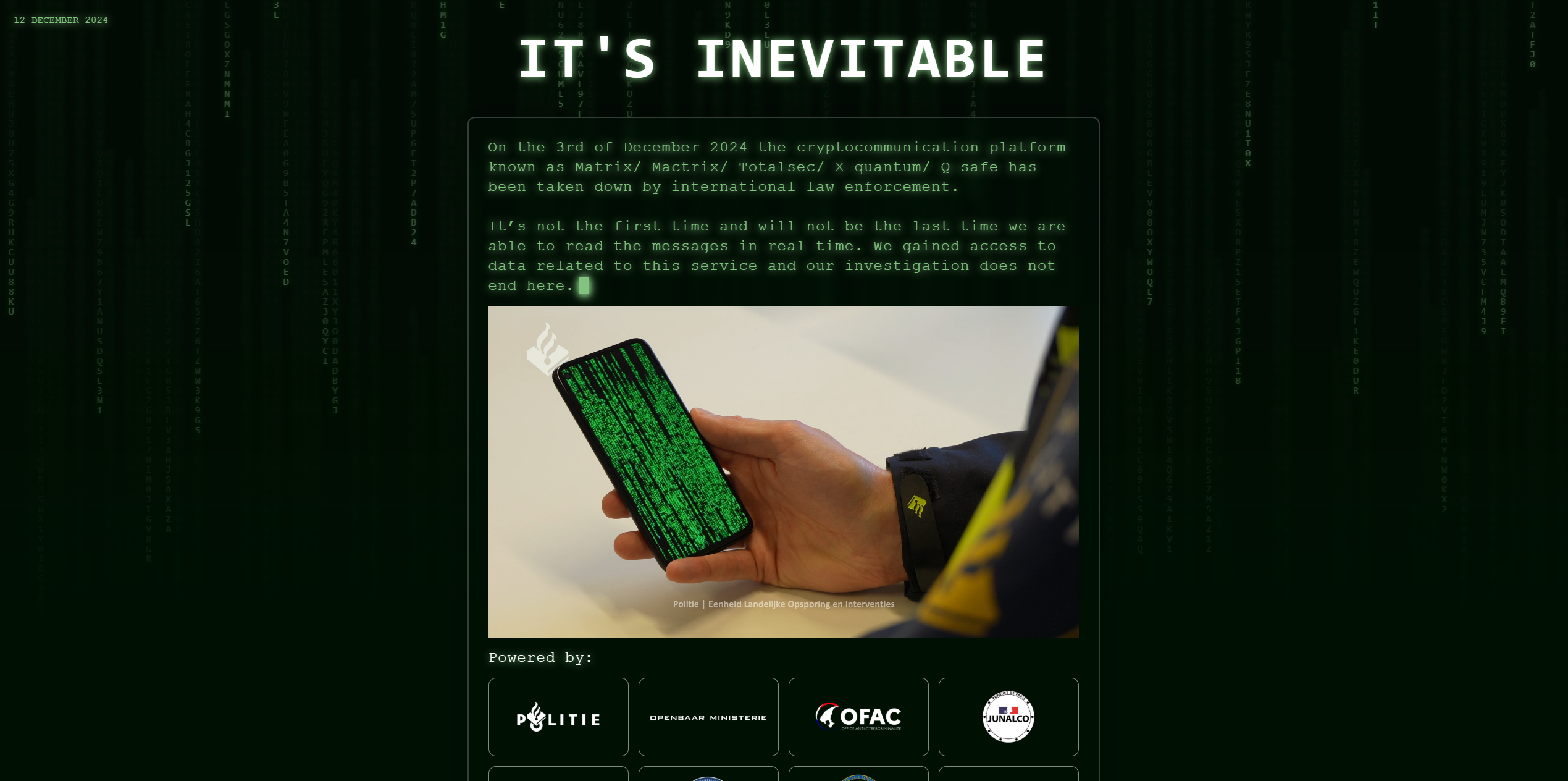
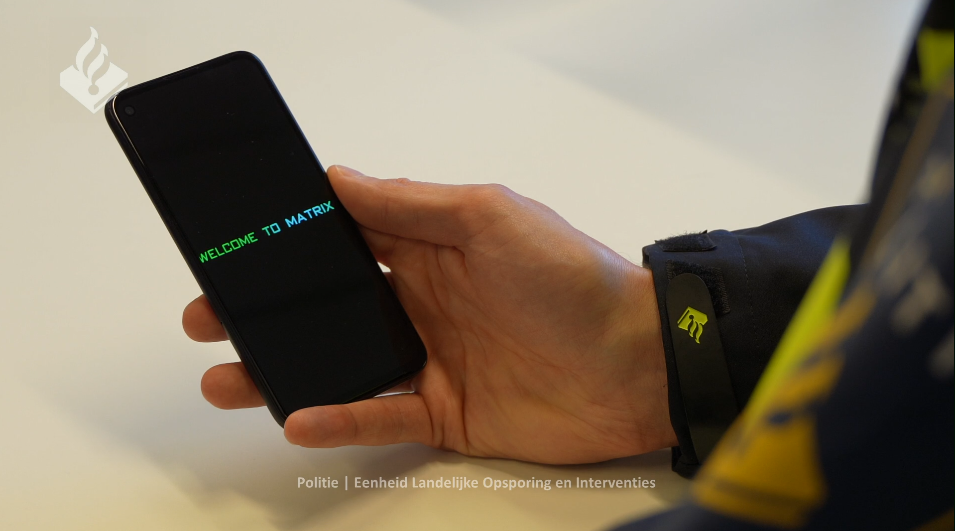
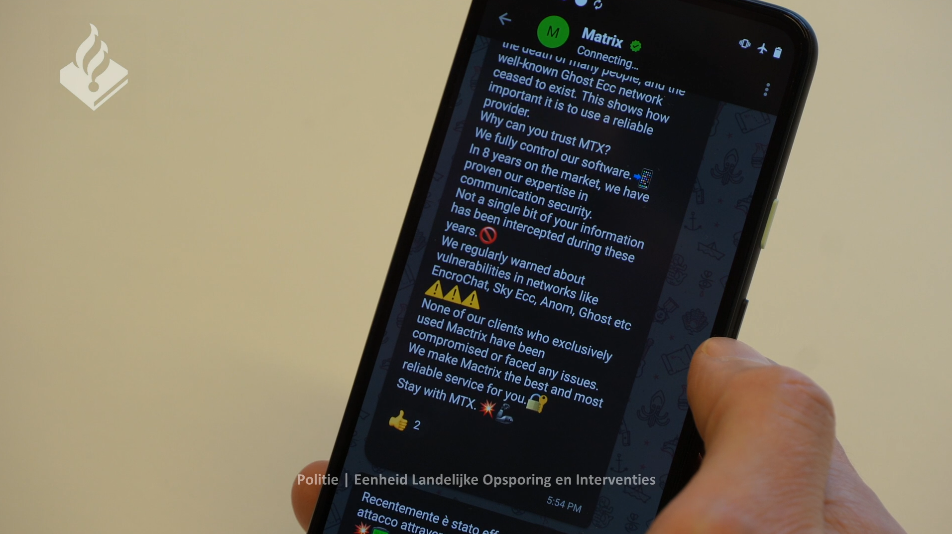
A few days ago, we woke up to the news that the National Police, together with Europol and other security forces, had carried out an operation in Marbella. They searched several homes and seized hundreds of thousands of euros in cash and cryptocurrencies. But the most striking detail was that they had dismantled a mobile phone repair workshop that specialized in fixing and modifying phones so they could communicate in a completely encrypted and secure manner—exactly the kind of service criminals seek to avoid detection. The tool they installed on these phones is called “Matrix,” an application that not only enabled encrypted calls but also allowed users to connect to the internet while concealing their trail through a network of up to 40 servers.
The first thing that crossed my mind when I saw the newspaper headline was the protocol I learned about at ElastixWorld 2014 (Colombia) from Matthew Hodgson himself. He had explained the security advantages and potential uses of the protocol they were developing. Without reading the full article, I jumped to the conclusion that some clever individuals had used the Matrix protocol to communicate in such a way that European law enforcement agencies couldn’t intercept them. Nothing could be further from the truth. Shortly afterward, on the BlueSky network, the great Fred Posner and others set me straight. Although they share the same name, these two things are very different.
What is the Matrix messaging service?
On one hand, the Matrix messaging service is what criminals were using to communicate anonymously and what has now been taken down. This service also goes by other names such as Mactrix, Totalsec, X-quantum, and Q-safe. It had over 8,000 accounts worldwide, with each user paying between €1,300 and €1,600 in cryptocurrencies to acquire a modified Google Pixel phone that included this service.
What is the Matrix protocol?
The messaging service known as Matrix is a decentralized, secure communication protocol that allows for end-to-end encrypted exchange of messages, files, and both voice and video calls among its users. Unlike centralized platforms, Matrix is based on a federated architecture, where multiple independent servers (instances) communicate with each other. This gives users greater control over their data and the ability to choose which server will host their account.
It’s essentially like a “Mastodon for communications,” where you can have your own server and connect to the Matrix network so that others can talk to you, call you, or even send files and much more.
Although it is a secure system, this is not the system that was shut down. It’s important to emphasize that it’s still fully operational, completely legal to use, and every day more and more people rely on it.
If you want to learn more about Matrix (the good one), I suggest you take a trip to Fosdem 2025 and get to know the RTC community. There, you can find out more about this and many other interesting protocols that are free, open, secure, and fantastic for everyday use.